


The Soldier And The Empire
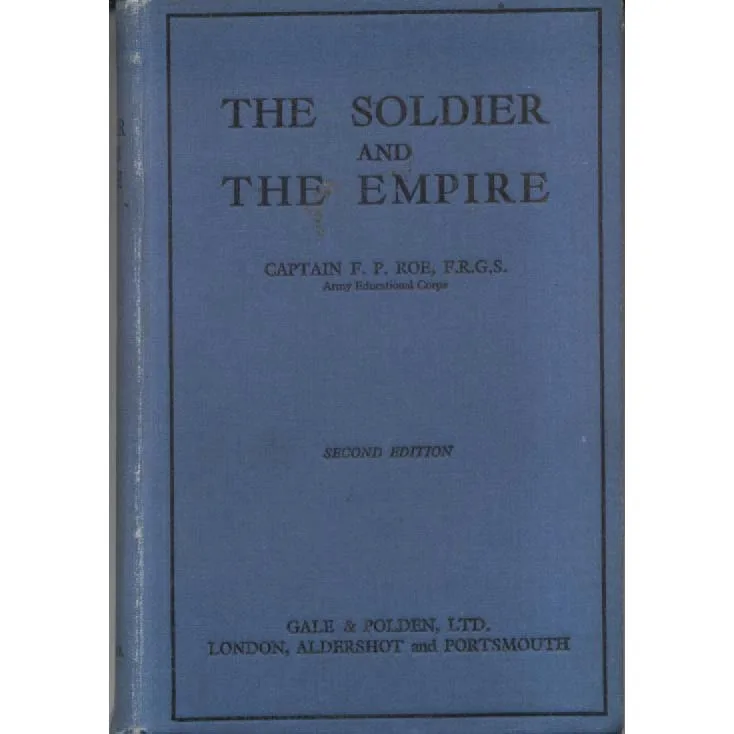
Publisher: Gale and Polden
Format: Hardback
ISBN: none
The Soldier and The Empire (1934) by F. P. Roe, published by Gale & Polden, arrives with the sort of title that doesn’t so much invite you to read as summon you. It’s the literary equivalent of a brass button being polished to within an inch of its life and then presented for inspection. No ISBN (because in 1934 books did not need barcodes to feel important). Condition: Good, as sold by Crappy Old Books — which is perfect for a work that probably expected its readers to sit up straight.
This is not a book that tiptoes. It plants its boots firmly on the page and begins discussing Big Things: duty, service, discipline, identity, patriotism, and that vast, awkward, sprawling word Empire — a term that, in 1934, could still be spoken with a straight face and a confident posture. The irony, of course, is that history has since turned the volume knob on that confidence, and now we read texts like this with two simultaneous expressions: curiosity and “oh… that’s what they thought.”
Gale & Polden, if you know them, were famously linked to military printing and the business of uniforms, orders, and respectable institutional prose — which means this book likely carries that crisp, officious tone: measured, certain, and entirely untroubled by the idea that the world might soon become extremely complicated. (And it was 1934. The future was warming up in the wings.)
So what do you get? A window into a mindset. Not just “soldiers” as individuals, but The Soldier as an idea — a symbolic figure tasked with holding together something larger than himself. The Empire, meanwhile, is presented as a framework to be defended, administered, and believed in. Whether the book is reflective, persuasive, nostalgic, or instructional, it’s rooted in that interwar atmosphere where people tried to make sense of one catastrophe while hoping — with varying levels of realism — that another wasn’t on the way.
And this is where the book becomes deliciously, unintentionally quirky for a modern reader. You may find sentences that assume permanence. You may find moral certainty delivered as calmly as a timetable. You may find a tone that says: this is how the world works, while you, the reader from the future, quietly whisper: “About that…”
But it’s not just an ideological relic. It’s also a historically valuable artefact: a glimpse of how Britain talked to itself about service and power in the years between the wars. Books like this aren’t merely about what happened — they’re about how people justified what happened, how they dressed it in principles, and how they explained it to the next generation.
This copy, in Good condition from Crappy Old Books, has survived long enough to become what it perhaps never intended: not simply a statement, but a document. Something you can read for its argument, yes — but also for its assumptions, its blind spots, its vocabulary, and its calm, confident worldview.
Ideal for readers who enjoy:
-
military history and interwar Britain
-
empire-as-idea (and empire-as-problem)
-
old books that sound like they’re wearing a tie
-
quietly fascinating “primary source energy” in printed form
A book from 1934 about The Soldier and The Empire.
What could possibly happen next?
Keep browsing: See more War books Other books by FP Roe
